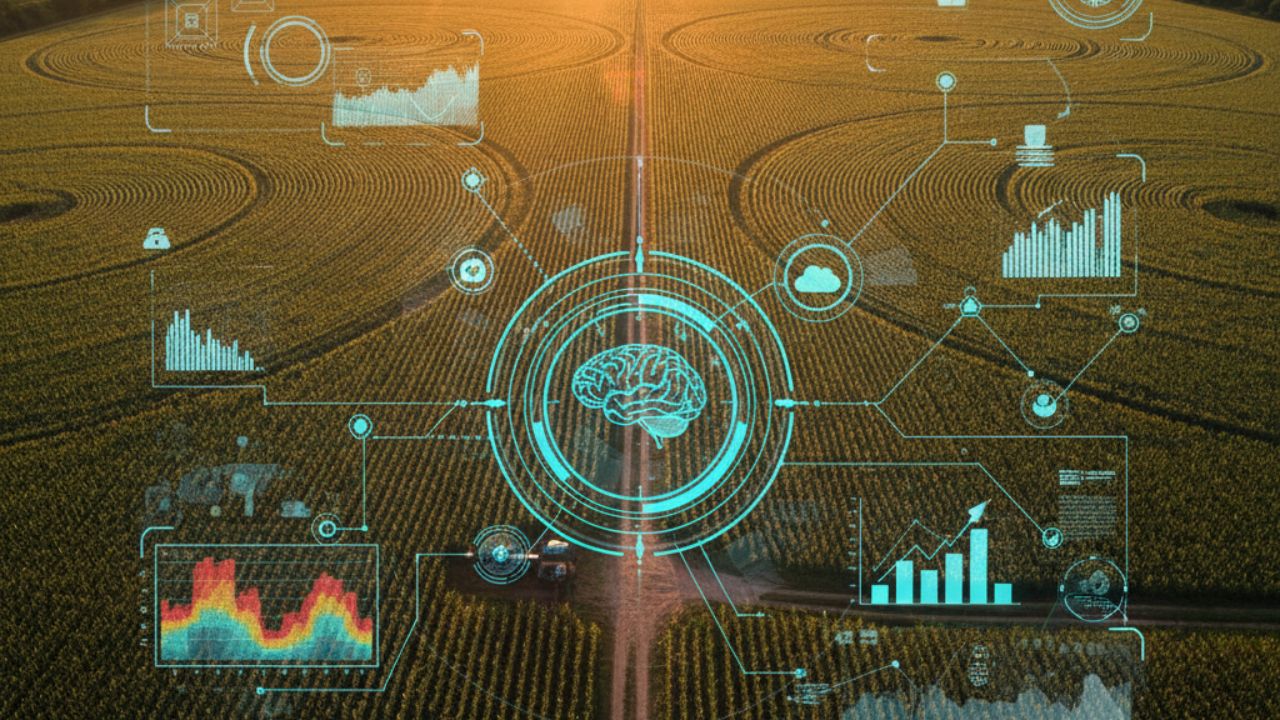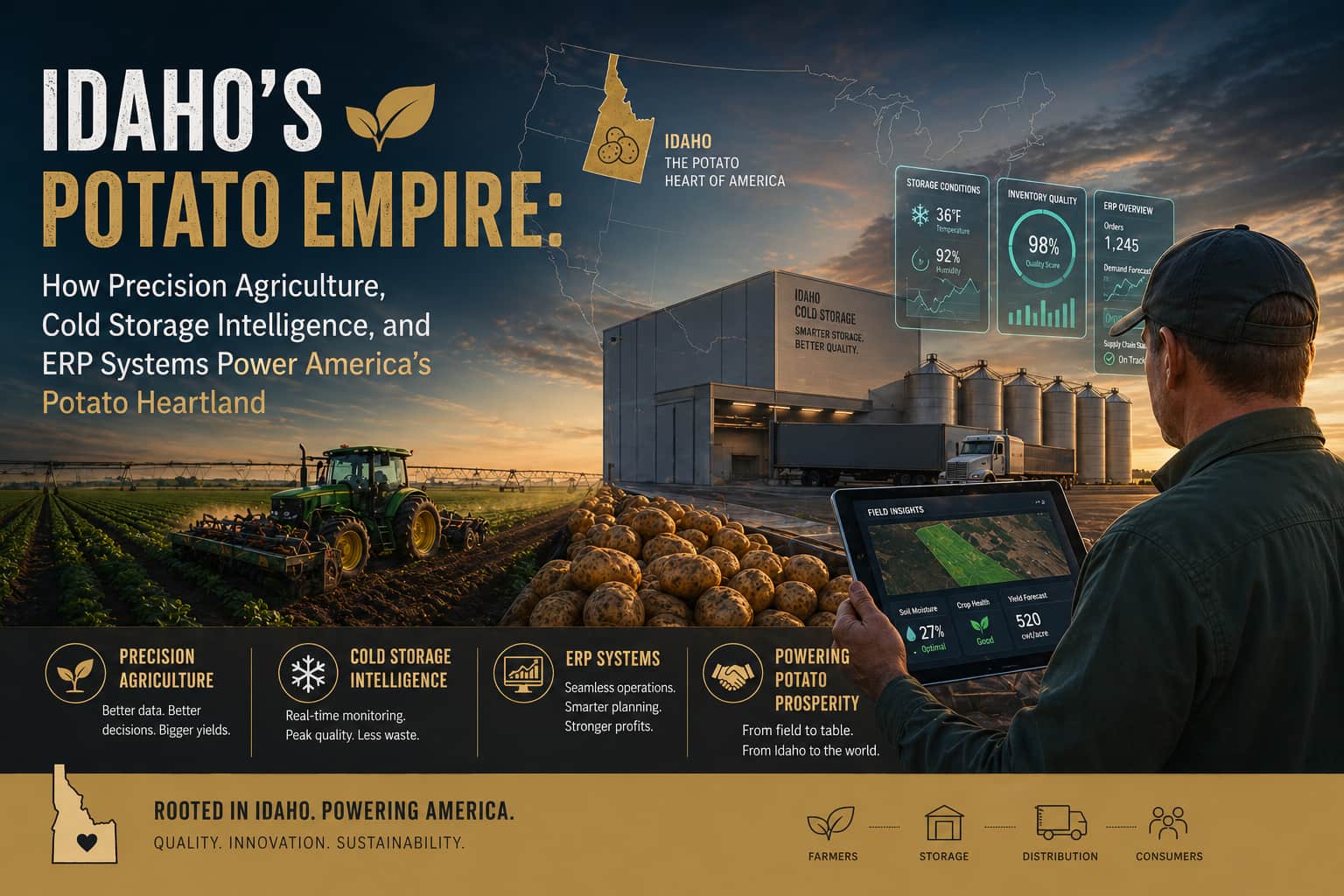
Inside the technology stack — from variable-rate pivots to AI-driven storage management to processor-integrated ERP platforms — that turns the Snake River Plain into one of the most operationally sophisticated agricultural regions on Earth.
Few American crops are as logistically demanding, capital-intensive, and operationally complex as the potato. And no U.S. state produces them at the scale, sophistication, or commercial dominance of Idaho. The Snake River Plain — a 400-mile arc of irrigated farmland stretching from the Wyoming border west to the Oregon line — accounts for roughly one-third of all potato production in the United States, generating crop value that consistently exceeds $1 billion at the farm gate and several times that figure once processing, packaging, and export are included.
What makes Idaho's potato industry remarkable is not simply scale. It is the depth of operational integration between field production, cold storage, processing contracts, and global supply chains — all orchestrated through increasingly sophisticated precision agriculture and ERP infrastructure. This article examines how that infrastructure is built, why potato production demands a fundamentally different ERP architecture than commodity grain, and where the industry is heading as climate, water, and labor pressures intensify.
Idaho's dominance is not accidental. Three converging conditions made the Snake River Plain the world's most productive potato-growing region.
First, soils. The volcanic-origin loams of southern Idaho drain well, warm quickly in spring, and produce tubers with the cosmetic uniformity demanded by both fresh and processing markets. Russet Burbank — the iconic Idaho potato — was bred in the late 19th century but found its operational home in these soils.
Second, water. The Snake River and its associated aquifer system support nearly continuous irrigation across approximately 300,000 acres of potato production. Without that water infrastructure — built largely between 1900 and 1970 through federal Bureau of Reclamation projects — modern Idaho potato production would not exist.
Third, climate. Cool nights during tuber bulking, low humidity that suppresses late blight pressure, and dry harvest conditions create an environment where storage-quality crops can be produced with relatively predictable yield outcomes.
According to USDA NASS data, Idaho's potato yields routinely exceed 480 hundredweight (cwt) per acre — among the highest in the world for commercial Russet production — and the state's processing capacity, anchored by Lamb Weston (headquartered in Eagle, Idaho) and J.R. Simplot (headquartered in Boise), gives growers privileged access to the global frozen french-fry market.
These geographic advantages share certain structural parallels with other irrigated specialty regions covered on AgriFlow ERP, including the Columbia Basin's farm efficiency systems and the broader Pacific Northwest crop yield landscape, though potato production layers operational complexity that even those high-management systems do not match.
A casual observer might assume potato farming resembles other commodity row crops. It does not. The defining feature of potato agronomy is that what happens in the field is only the beginning of the value chain — and decisions made at planting cascade across storage, processing, and end-market outcomes that may not resolve until ten months later.
Several sources of complexity make potato production unlike grain or oilseed operations:
This profile makes potato operations among the most ERP-dependent in U.S. agriculture. The technology is not a productivity enhancement — it is the operational substrate without which industrial-scale potato production simply cannot be coordinated.
The application of precision agriculture to potato production is in many ways more advanced than in commodity grain operations, because the per-acre value of decisions is substantially higher.
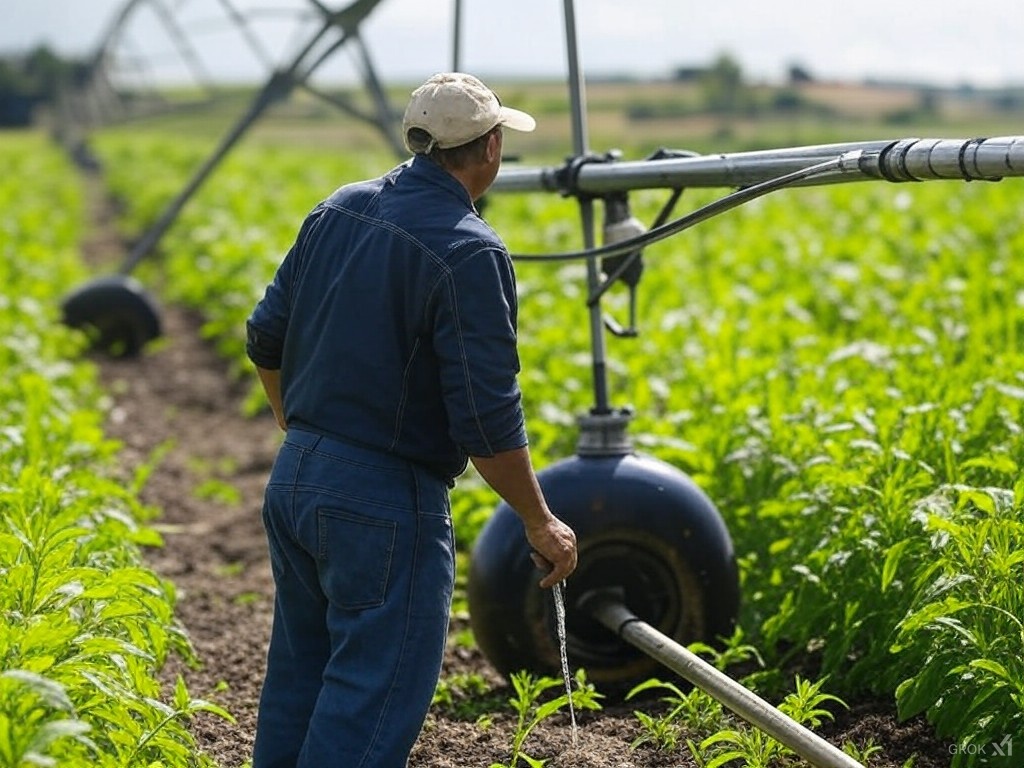
The defining input in Idaho potato production is water. Center pivot irrigation dominates, and modern systems increasingly support variable-rate irrigation (VRI) — adjusting water application across the field based on soil texture, topography, and real-time crop stress signals. Inadequate water during tuber initiation reduces tuber count; excess water during bulking causes hollow heart and growth cracks. The agronomic window is narrow.
Fertigation — delivery of nutrients through the irrigation system — adds another precision layer. Nitrogen, phosphorus, potassium, and micronutrient delivery is now scheduled in 10 to 20 split applications across the season, calibrated to petiole nitrate testing and tuber growth stage. The methodologies parallel those examined in our coverage of drone-based irrigation management in California, though Idaho's larger pivot footprints and processor-driven quality specifications push the precision requirements further.
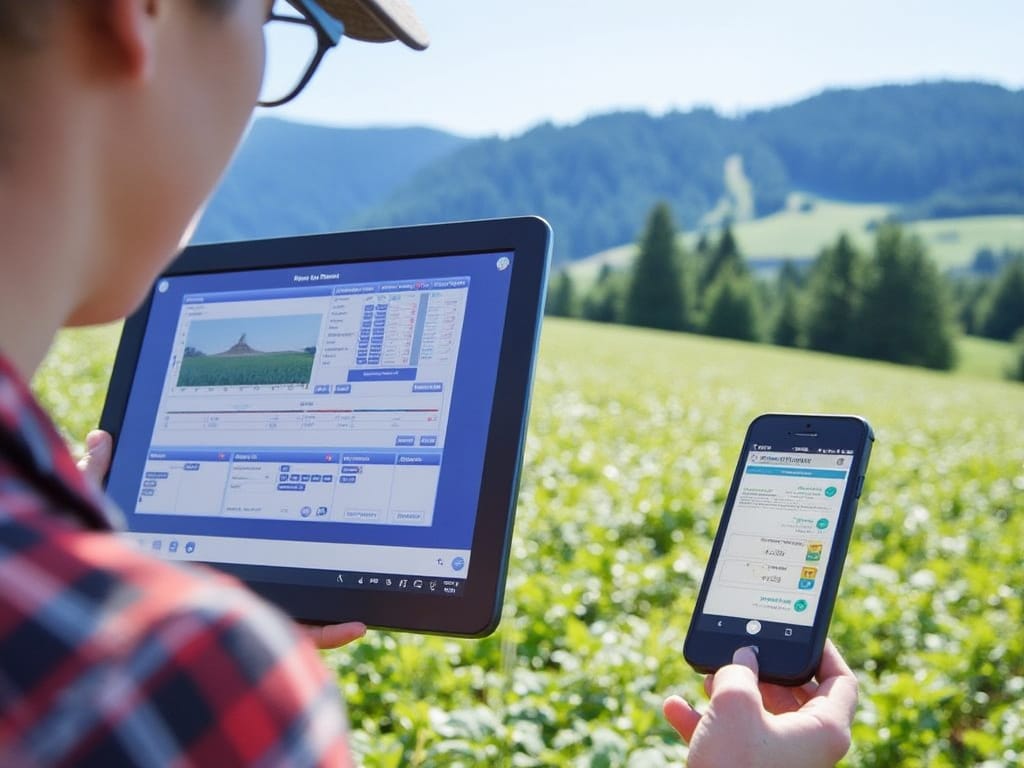
Networks of soil moisture probes, electromagnetic conductivity sensors, and weather stations now blanket commercial Idaho potato operations. Data flows continuously to centralized dashboards, often integrated with pivot control systems for closed-loop irrigation management. The operational principles are essentially those described in our overview of IoT in American farming, with the practical distinction that potato operations require finer spatial resolution because tuber quality is more sensitive to micro-variation than grain yield.
Late blight — the disease that triggered the Irish Potato Famine — remains the single greatest disease threat to potato production globally, including in Idaho. Modern disease modeling systems integrate weather data, regional spore monitoring, and field-specific risk profiles to recommend fungicide timing with high precision. Variable-rate fungicide application, while less common than variable-rate fertilization, is increasingly deployed on operations with significant topographic variation.
Colorado potato beetle, aphid-vectored viruses, and wireworm pressures each demand their own monitoring and treatment protocols. The integration of this complexity into operational decision-making is a clear application of artificial intelligence and machine learning in farm management, with predictive models now widely deployed across leading operations.
NDVI, NDRE, and increasingly thermal imagery from satellites, drones, and aircraft inform mid-season management decisions: identifying nitrogen deficiency zones, detecting early disease symptoms, and guiding desiccation timing prior to harvest. The desiccation decision — when to terminate the crop to set the skin and prepare for harvest — is one of the highest-stakes timing decisions in potato production, with direct consequences for storage performance.
If field operations occupy the first half of the potato production calendar, storage occupies the second half — and increasingly, the technology investment.
A modern Idaho potato storage facility is a precision-engineered environment that may hold 20 to 100 million pounds of potatoes at temperatures between 38°F and 50°F, depending on end use. Process potatoes destined for french fries are typically held at 45°F to maintain frying quality; fresh potatoes are stored cooler; chip potatoes require warmer conditions to prevent sugar accumulation that causes browning.
Active management variables include:
Modern storage facilities deploy hundreds of sensors per building, with real-time data feeding into AI-augmented control systems that anticipate condensation events, pile heating risks, and disease outbreaks before they manifest. The economics are stark: a single uncontrolled rot event in a 30-million-pound storage building can cost $1 million or more.
Integration of storage telemetry with farm-level ERP systems is one of the highest-leverage capabilities in the modern potato industry. Operators can now reconcile field-level production records, harvest moisture and quality data, storage environmental history, and out-load grade reports into unified analytics — closing the loop between agronomic decisions and final commercial outcomes. The mobile dimension matters here as well, with storage managers monitoring buildings remotely through the kinds of mobile-first ERP interfaces we have explored in detail.
A potato-capable ERP must natively model several dimensions that commodity grain platforms typically do not handle well.
Lot and contract segregation. Potatoes from a specific field, on a specific harvest date, going into a specific storage building, against a specific contract, must be traceable through every subsequent movement. This is identity preservation at industrial scale, with quality grading layered on top.
Multi-class crop accounting. Russet Burbank seed, Russet Burbank commercial, Russet Norkotah fresh pack, and chip stock cultivars must be tracked separately, with distinct cost accounting, agronomic protocols, and revenue recognition.
Storage building-level inventory. Inventory is not just by quantity but by location, quality grade, age, and contractual destination. A 30-million-pound building may hold ten distinct lots, each with its own shipping schedule.
Processor contract management. Contracts with Lamb Weston, Simplot, and others specify delivery windows, quality thresholds, premium and discount structures, and often crop input requirements. The ERP must reconcile contracted volumes against in-storage inventory at any moment.
Seed potato certification tracking. For seed-producing operations, lot-by-lot certification, generation tracking, and disease testing records must be auditable to the buyer and to state certification agencies.
Integrated freight and logistics. Potatoes move primarily by truck — to local processors, to fresh-pack sheds, and to rail terminals for cross-country distribution. Real-time freight visibility, demurrage management, and load tracking integrate directly into the ERP layer, mirroring the orchestration challenges examined in our analysis of Midwest agricultural logistics, with the added dimension of tight delivery-window discipline.
These requirements make potato ERP one of the most demanding crop-specific implementations in U.S. agriculture. Generic agronomy platforms — even strong ones — typically struggle to model the storage and contract dimensions natively, leading to fragmented data architectures that undermine the operational visibility growers actually need.
Idaho is also one of the world's most important seed potato producers, supplying disease-tested, variety-pure tubers to commercial growers across North America. Eastern Idaho's high-elevation, low-aphid-pressure environments are particularly suited to this work, with growers operating under generation limits that ensure each seed lot remains close to its tissue-culture origin.
Seed certification protocols — operated by the Idaho Crop Improvement Association — require lot-level traceability, virus testing, and visual inspection that most commercial agriculture never encounters. The ERP requirements here are exacting: every lot, every generation, every field history, every test result must be auditable in real time. Many seed operations now run distinct ERP modules dedicated to certification compliance, with data flows extending back to tissue culture laboratories and forward to commercial customers who must verify origin.
The biotechnology dimension is also significant. Recent advances in biotechnology and crop resilience — including innovative approaches to disease resistance, bruise tolerance, and reduced acrylamide formation in processing — are reshaping cultivar choices across the industry. The interplay between genetic improvement and operational data systems is becoming progressively tighter.
The fundamental constraint shaping Idaho's potato future is water. The Snake River system is fully appropriated; the Eastern Snake Plain Aquifer has experienced documented decline over decades; and competing demands from urban growth, environmental flows, and other agricultural users are intensifying.
Several responses are visible across leading operations.
Pivot conversion. Continued conversion from older flood and wheel-line systems to high-efficiency center pivots with VRI capability, often financed in part through state and federal cost-share programs.
Drip irrigation in seed potato. Drip systems, while uncommon for commercial potatoes, have gained traction in premium seed and specialty operations where water savings of 20–30% justify capital costs.
Aquifer recharge programs. Cooperative recharge initiatives that divert spring runoff into recharge basins are becoming standard infrastructure, reflecting the integrated approach to water management we have examined in our coverage of water management strategies for drought-resilient cropping.
Sustainable agriculture certification. Voluntary certifications and processor-driven sustainability programs increasingly require documented water use efficiency, with ERP systems serving as the audit trail.
The carbon dimension is also emerging. While potatoes are not currently a focal commodity in carbon credit programs, reduced tillage, cover cropping in fallow rotation years, and precision input management all generate sustainability attributes that are increasingly demanded by downstream brands. The broader framework of climate-smart agriculture is shaping conversations across the Idaho potato industry, particularly among growers serving sustainability-conscious processor customers.
Idaho's potato industry is structurally inseparable from its processing infrastructure. Lamb Weston operates multiple Idaho plants and is one of the world's largest frozen potato processors. J.R. Simplot — the company that essentially invented the commercial frozen french fry — operates major facilities at Caldwell and elsewhere. McCain Foods, headquartered in Canada but with significant U.S. capacity, completes the dominant processor triad.
These relationships are not transactional. They are deeply integrated, with multi-year contracts, jointly developed agronomic protocols, and increasingly shared data infrastructure. Processors increasingly demand that contracted growers operate ERP systems capable of providing real-time inventory and quality data, allowing the processor to optimize plant scheduling against contracted supply.
This level of supply chain integration creates substantial operational efficiency but also concentration risk. A grower whose ERP cannot interoperate with a major processor's systems faces real commercial disadvantage. The technology choice is no longer purely a grower decision; it has become a contract qualification.
While processing dominates Idaho's potato volume, the fresh pack sector remains commercially significant, particularly for the Russet Norkotah variety. Major shippers — many of them grower-owned cooperatives — wash, grade, size, and pack potatoes for retail distribution under the iconic Idaho Potato Commission marketing umbrella.
Export markets, though smaller than processing or domestic fresh, have grown steadily. Mexico, Japan, South Korea, Taiwan, and the Caribbean represent meaningful destinations for Idaho fresh potatoes and frozen processed products. Export documentation, phytosanitary compliance, and country-specific quality specifications add another ERP layer, with operational parallels to those we examined in our analysis of the basmati rice supply chain — though potato exports operate at higher value and shorter shelf-life intensity.
Traceability for export markets has become increasingly important. While potatoes are not subject to the European Union Deforestation Regulation in the same way as soy or cocoa, broader food safety traceability requirements — including U.S. FDA Food Safety Modernization Act provisions — demand lot-level tracking from field to consumer. The principles of blockchain-enabled agricultural transparency are being explored in pilot deployments across the industry, particularly for premium export channels.
The Idaho potato industry shares structural parallels — and instructive contrasts — with other specialty production regions covered on AgriFlow ERP.
Compared with Florida citrus operations, Idaho potato production operates on similar quality-driven pricing but with annual rather than perennial production cycles, and substantially heavier post-harvest storage management. The ERP demands overlap in contract management and quality grading but diverge sharply in storage versus packing-house orientation.
Compared with Heartland soybean ERP systems, Idaho potato operations involve far higher per-acre input intensity, more complex variety segregation, and an entirely different relationship to storage. Soybean ERP optimizes commodity-grade output; potato ERP optimizes contract-specific quality outcomes.
Compared with organic ERP profitability frameworks, the Idaho potato industry includes a meaningful and growing organic segment — particularly in fresh pack — but the processing-dominant profile of the broader industry limits organic penetration relative to other specialty crop sectors.
Several trends are likely to define the Idaho potato industry's next decade.
For practitioners, growers, and analysts seeking authoritative reference data, the USDA Economic Research Service provides the most reliable foundation for U.S. potato industry statistics and policy analysis, while industry-specific commercial intelligence is centralized through the Idaho Potato Commission and university research programs at the University of Idaho.
For Idaho potato producers — and specialty crop operators more broadly — evaluating their digital infrastructure, several principles consistently distinguish successful deployments.
These principles apply broadly to specialty crop ERP, but their cumulative weight in potato operations — driven by storage complexity, contract intensity, and quality-spec dependence — makes their disciplined application unusually consequential.
Idaho's potato industry has built, over more than a century, one of the world's most sophisticated specialty crop production systems. The combination of geographic advantage, processor concentration, and decades of agronomic refinement has produced an industry that operates at scales and precision levels few other crop sectors approach.
What has changed in recent years is the digital infrastructure that binds field, storage, processor, and customer into a single operational system. Precision agriculture in the field, IoT and AI in storage, and ERP integration across the entire value chain together represent a quiet but decisive transformation. The result is not just higher yields or lower costs — it is the ability to operate complex multi-cultivar, multi-contract, multi-channel businesses with a coherence that was simply impossible a generation ago.
For operators inside the industry, the technology trajectory is clear: continued investment in integrated data infrastructure, deeper processor interoperability, and AI-augmented decision-making will increasingly distinguish high-performing operations from average ones. For agribusinesses elsewhere — particularly in specialty crop sectors facing similar quality-grade economics and storage-driven complexity — the Idaho potato model offers a working template.
The technology that turns the Snake River Plain into a global potato powerhouse is not unique to potatoes. But the discipline with which it has been applied is.
For continued analysis of how technology is transforming American specialty crop regions, explore our coverage of California farm ERP transformation, the integrated California-Texas agricultural ERP landscape, Northern Plains pulse crops ERP, and the broader agtech innovations transforming modern farms.

Find Agriflow in other countries of Africa